My fifth birthday was less than two weeks before the attacks of September 11, 2001. All I can remember from that day and the days following was sitting on our living room coffee table in my baseball uniform, holding my bat and mitt, while my dad sat nearby and had a staring contest with Fox News. I also remember talking with my parents, and they explained how the day unfolded. Originally everyone thought it was a small plane and a pilot had made an error. Then the second plane hit. We now knew it wasn’t an error… or small plane.
As a 5-year-old, it seemed significant, but also you just assume stuff like 9/11 happens regularly. In church, you learn about sin and the battle of good versus evil. As a young boy, you play “army man” in the backyard and something about war and fighting is just fascinating. This seems like something that just happens when you live in a fallen world. What I didn’t learn about until years later was the America of September 12, 2001.
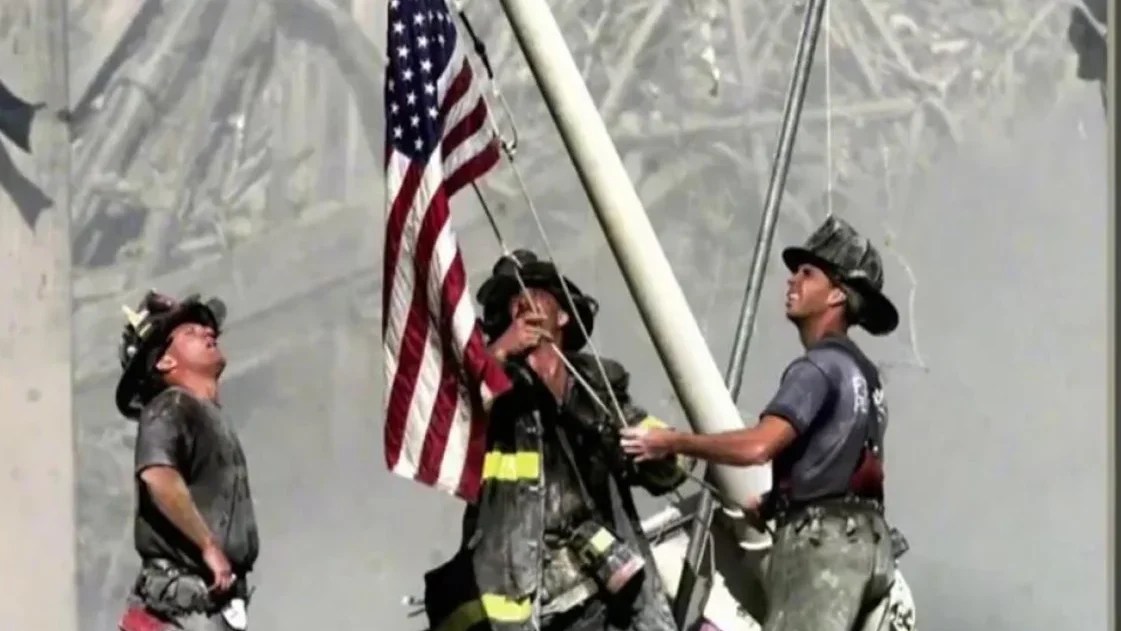
People reference the day after 9/11 every time we face massive division. Even though it happened in New York, people older than me talk about the patriotism and unity in their community, no matter where they lived in the country. Police, firefighters, and first responders nationwide share how people would honk and wave and thank them, even if they had no ties to New York or Ground Zero. I was too young to realize how a 9/12 America felt, but everyone I ask speaks of it fondly, usually concluding with a “it’s sad it takes something like a 9/11 for us to come together” or “if only we could have a 9/12 country without going thru another 9/11.”
A couple times a year, I will go on YouTube and watch a handful of sports videos that I know will bring me chills or tears. There’s the Mike Piazza home run at the first baseball game in New York after 9/11. People have said how that score wasn’t for the Mets, or even New York, but for the nation. I personally love the one of Sammy Sosa at Wrigley Field for the first Cubs home game after 9/11. Before the game, the Dominican athlete greeted fans by running around the outfield holding a small American flag. That was only overshadowed by his home run that game, where he brings the little flag back out as he rounds first, and jogs the bases with Old Glory in his right hand like a toddler running around with a sparkler.
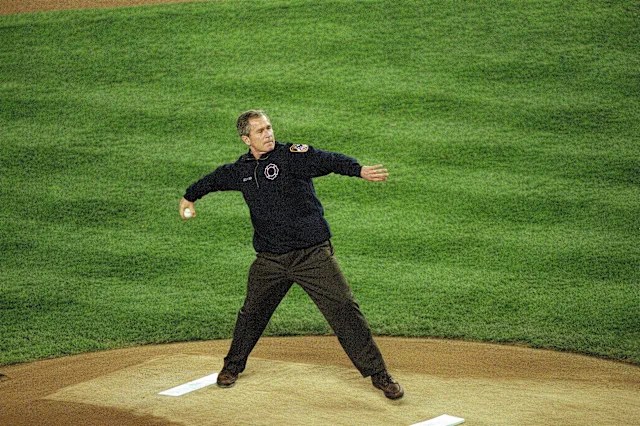
At game 3 of the World Series in October 2001, the Yankees hosted the Arizona Diamondbacks in New York. The first pitch, which usually happens well before most of the crowd arrives, is seen by the sold-out stadium and felt by the nation. Newly-elected-president George W. Bush comes out of the dugout in an FDNY pullover (which not just showed support for the first responders, but also concealed a bulletproof vest). He waves to the crowd, throws a strike, waves again, then is escorted off the mound by “USA” chants.
A little more than a decade later, Boston experienced its own evil when runners and spectators at the Boston Marathon were killed by bombs hidden near the finish line. The hockey game scheduled for the same day was postponed, but two days after the terrorist attack that killed three and injured nearly 300 more, the Boston Bruins hit the ice with singer Rene Rancourt. They had hoped to take minds off of the bombings for even just a few hours. Rancourt sang the national anthem at Bruins games for 42 years, and at one point said the game two days after the bombing was the only anthem he didn’t sing. Even though he walked out on the rug in his tuxedo, the crowd at Boston’s TD Garden took over and sang. The city needed that one.
My elementary school years were 9/11 and the war in Iraq. Middle school was the financial crisis and my introduction to politics with the Obama-McCain election. High school was the Benghazi attacks, Boston Marathon bombing, genesis of Black Lives Matter, and the takeover of social media platforms from widely-used smartphones.
In college, it was Ferguson, same-sex marriage legalized nationwide, Trump shaking up the 2016 election and the institutions, #MeToo, and the push for sharing preferred pronouns (I still remember the first time the pronoun thing came up on syllabus day in 2018… myself plus 35 others including the professor didn’t know what was being asked, so it was explained to us by two young ladies sporting haircuts that you would have if you played the pronoun game in its early stages).
Then two years later, the COVID-19 coronavirus variant shut down the world, George Floyd resurrected the BLM that hadn’t really shown up since Ferguson, the 2020 election was decided via snail mail, and by January 6, 2021, and the subsequent inauguration of Biden behind a fortified Capitol, the nation of 9/12 I had heard so much about seemed like an urban legend.
I hope we return to it. I long for the country that waved American flags at ballgames and chanted “USA” even if it was towards a president they didn’t like. Now a president gets shot in the ear and a not-small number of people complain the shooter missed the head.

I could talk extensively about unity or lack thereof (and hope to in future posts/podcasts), but as of late September 2025, I am not sure how attainable it is outside of Christianity. And even then, it’s still really hard at times.
There’s a story of American evangelist Billy Graham at a meeting in Germany with post-WWII chancellor Konrad Adenauer. Graham is asked by Adenauer, a Catholic, if Graham truly believes in the resurrection of Jesus Christ. Graham answers something close to, “Of course! If there is no resurrection, then I have no gospel left to preach.” Adenauer replies, “Mr. Graham, apart from the gospel of Jesus Christ, I know of no other hope for mankind.”
As Christians, we are united by the same goal, serve the same God, submit to the same law, and receive the same identity in Christ. There is true unity amongst diversity in this. As Americans, we can’t agree on goals, we serve different gods, have complete different views of the Constitution, and are constantly being divided by earthly identities. You can’t just legislate your way out of this. There is no solution for unifying apart from Christ.

On September 12, 2001, our country looked completely different than it looks today. Demographically, economically, religiously, politically, socially, even physically. By almost every metric, we are worse off and it is showing. If you are a Christian residing in the United States, please join me in praying and working to redirect our nation back towards Christ; then towards each other. There is no legitimate hope outside of the finished work of Christ. There is no lasting help outside of the Church.
In a country where we, believers included, have split teams into who is vaxxed and who isn’t, who is white and who isn’t, and who gets talking points from MSNBC and who uses Newsmax (spoiler alert; media conglomerates are all owned by the same few companies), unity will not be easy or even natural at times. However, it is vital.
We can bicker about differences like school choice or infant baptism later on. Right now, all believers and patriots have to come together while “the fields are ripe and ready for harvest.” Catholics who preach Christ crucified in Latin Mass, and evangelicals whose pastor wears jeans to church, unite! “I like Trump’s policies, but not his rhetoric,” and “I love Trump because he says what we’re all thinking,” unite! Those who don’t follow politics and those who watch the news like a hawk, unite!
We have souls to save, and a nation to rescue.

 CATTLE CALL PODCAST